Residential Roofing Types: Shingle, Metal, Tile, and Flat Roofs Compared
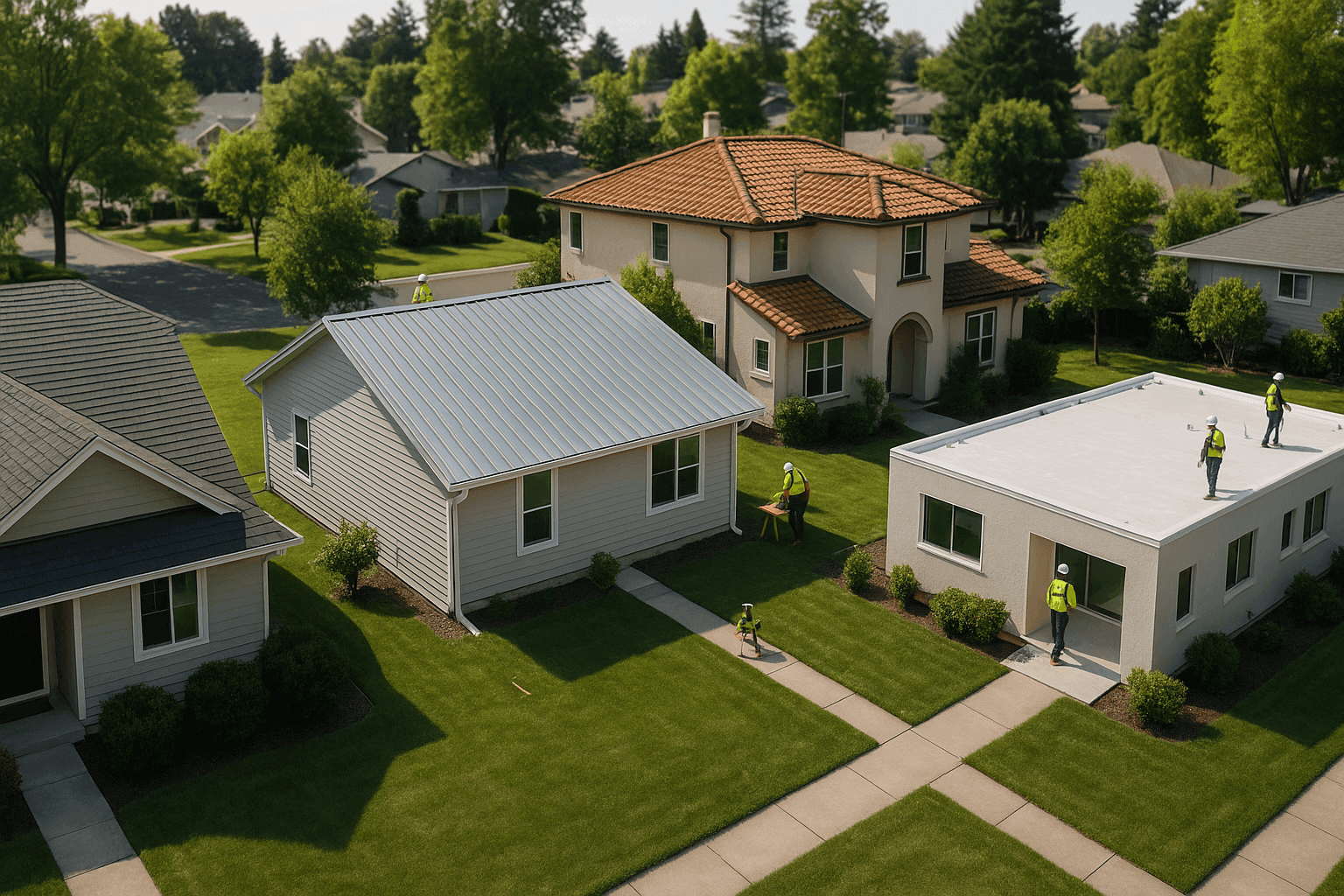
Choosing a roof isn’t just about what looks good from the curb. It’s about weathering storms, staying energy efficient, and keeping your family or business dry—no matter what’s falling from the sky. At Robert Nelson Roofing, we know that picking the right roof can feel overwhelming, especially when every option comes with its own list of pros and cons.
Whether you need emergency roofing after a storm or you’re planning for new construction, understanding your choices is the first step. Here’s our honest, hands-on guide to the four most popular types of residential roofing: shingle, metal, tile, and flat roofs.
Overview of Roof Types
Let’s break down the four common roofing types we see on homes and businesses:
- Shingle Roofing: The classic. Affordable, familiar, and found on neighborhoods everywhere.
- Metal Roofing: Sleek, strong, and making a comeback for homeowners who want a modern touch.
- Tile Roofing: Old-world charm and serious staying power—built to last generations.
- Flat Roofs: Clean lines, often seen on modern homes and commercial properties.
Each roof tells a different story. Some are built for wild weather, others for long, sunny days. But which one fits your property? Let’s compare.
Shingle Roofing 🏡
Shingle roofs are like blue jeans—timeless, practical, and they fit just about anywhere.
Suitability
- Works well for most residential homes.
- Handles a mix of climates: rain, snow, or sun.
- Good for steep and moderate slopes.
Durability
- Typical lifespan is 15–30 years, depending on the quality and local weather.
- Resistant to moderate wind and impact, but severe storms may cause damage.
Maintenance
- Easy to repair or replace single shingles.
- Regular inspections after storms are important—loose or missing shingles can lead to leaks.
- Moss and algae can grow in wet climates; cleaning helps.
Cost
- One of the most cost-effective roofing choices.
- Installation is quick, minimizing labor costs.
Style
- Wide range of colors, shapes, and textures.
- Blends with just about any home design.
Practical Pointers
- Look for shingles meeting ASTM D3462 standards.
- If you’re searching for “Gutter Repair near you,” keep in mind that clogged gutters can speed up shingle wear.
Metal Roofing ⚡
Metal roofs are like an armored car for your house—tough, shiny, and built to handle whatever the weather throws at you.
Suitability
- Great for both residential and commercial buildings.
- Performs especially well in areas with heavy rain, snow, or wildfire risk.
Durability
- Often lasts 40–70 years.
- Resistant to wind, hail, fire, and rot.
Maintenance
- Needs less upkeep than shingles.
- Occasional inspection for loose fasteners or sealant.
Cost
- Higher upfront investment, but less spent on repairs or replacement over time.
- Energy-efficient—can lower cooling costs in sunny climates.
Style
- Sleek, modern look with different panel styles (standing seam, corrugated, etc.).
- Available in a spectrum of finishes and colors.
Practical Pointers
- Check for materials that meet UL 2218 impact resistance.
- For eco-friendly options, ask about recycled content and reflectivity ratings.
Tile Roofing 🏺
Think of tile roofing as the classic sports car of roofs—elegant, eye-catching, and engineered for longevity.
Suitability
- Best in warm, dry regions (think Mediterranean or Southwestern styles).
- Heavy—requires strong roof structure.
Durability
- Can last 50–100 years with proper care.
- Resistant to insects, rot, and fire.
Maintenance
- Tiles can crack under impact; walking on the roof should be avoided.
- Occasional replacement of individual tiles is sometimes needed.
Cost
- Higher material and installation cost due to weight and handling.
- Long lifespan can offset the upfront expense.
Style
- Distinctive, high-end look—curved or flat tiles in clay, concrete, or slate.
- Boosts curb appeal and resale value.
Practical Pointers
- Ensure installation meets local building codes for weight.
- Regular gutter cleaning keeps water flowing off heavy tile roofs.
Flat Roofs 🏢
Flat roofs are like a blank canvas—simple lines, endless uses, but they need careful planning to avoid headaches.
Suitability
- Common on commercial buildings and some modern homes.
- Ideal for rooftop decks or solar panel installations.
Durability
- Typical lifespan is 10–30 years, depending on materials (EPDM, TPO, modified bitumen).
- Vulnerable to ponding water if not properly sloped.
Maintenance
- Needs regular inspection for cracks, seams, and drainage issues.
- Quick action required after heavy rain or snow.
Cost
- Moderate installation and material costs.
- Repairs are usually straightforward.
Style
- Clean, contemporary look.
- Allows for creative use of rooftop space.
Practical Pointers
- Follow NRCA guidelines for drainage and flashing.
- Sealants and coatings can extend the life of your flat roof.
Which Is Best for You?
There’s no single winner—just the right fit for your needs. Here’s how to narrow it down:
- Budget: Shingles are friendly on the wallet. Metal and tile cost more but last longer.
- Climate: Metal for wild weather, tile for heat, shingles for all-around value, flat for modern or commercial spaces.
- Maintenance: Metal and tile need less hands-on care; shingles and flat roofs need more routine checks.
- Style: Tile stands out, metal looks sharp, shingles blend in, flat roofs keep things simple.
Real-World Example
A family in a storm-prone region needed emergency roofing after hail damage. They switched from shingles to metal for better storm resistance and lower insurance rates. Meanwhile, a local business owner chose a flat roof with eco-friendly coatings for easy solar panel installation and lower cooling bills.
Local and Seasonal Considerations
Roofing isn’t “one size fits all.” Here’s how the local climate shapes your choice:
- Heavy rain or snow? Metal sheds water and snow quickly.
- Hot, sunny climates? Tile and reflective metal reduce heat absorption.
- Windy zones? Shingles rated for high wind, or metal panels with secure fasteners, hold up best.
- Historic neighborhoods? Tile or architectural shingles keep the look authentic.
Always check your municipality’s building codes and permit requirements (see the International Building Code and local amendments).
Maintenance Tips for Every Roof
- Schedule an annual roof inspection—catch issues before they become emergencies.
- Keep gutters and downspouts clear—water backup is a roof’s worst enemy.
- Trim overhanging trees to reduce debris and limb damage.
- For commercial buildings, watch for pooling water on flat roofs after storms.
Costs and Time Factors
- Shingle: Lower upfront cost, quick install (1–3 days for most homes).
- Metal: Higher cost, moderate install time (2–5 days), long-term savings.
- Tile: Highest initial cost, longer install (up to a week), exceptional lifespan.
- Flat: Moderate cost, 2–4 days install, regular upkeep needed.
Remember: prices can vary by region, material quality, and roof complexity.
When It’s an Emergency
If your roof is leaking, sagging, or missing big sections after a storm, call for emergency roofing right away. Quick action prevents further water damage—especially if you notice water stains on ceilings, bubbling paint, or debris scattered around your yard.
FAQ
How do I know which roof is right for my house?
Think about your climate, budget, and style. Consider how long you plan to stay in your home, and whether you’re likely to need emergency roofing repairs.
What roof lasts the longest?
Tile and metal roofs can both last 50 years or more with good care.
Will my roof handle solar panels?
Flat and metal roofs are ideal for solar. Shingle and tile can work too, with proper installation.
Do I need to move out during a roof replacement?
Usually not. Most roof work is noisy, but you can stay home unless major structural repairs are required.
Ready to talk about your roof? Call Robert Nelson Roofing now — or reach us anytime at 888-897-9811 .